
What is Cancer?
Normal cells in the human body follow instructions contained in their genes to determine when to start or stop growing (dividing), when to die (apoptosis), and what and where their role is in the human body. A cancer cell is one whose genetic code has mutated so it no longer follows these rules. Cancer cells are able to divide and multiply uncontrollably, become immortal (ignore apoptosis), and even move around into different areas of the human body.
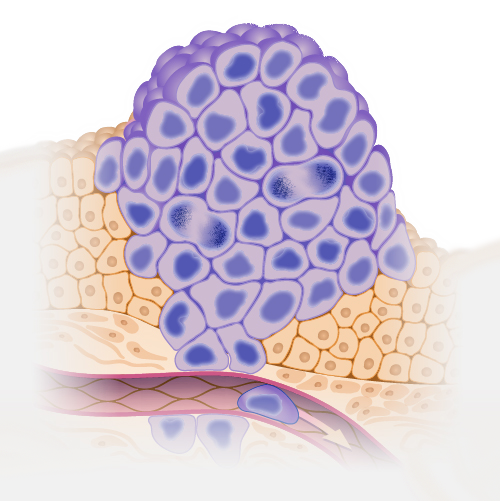
Cell division is how the human body grows and repairs itself. But every cell’s life-cycle, location, and growth is highly regulated. The body sends signals to cells to start dividing (growing) and other signals to stop. The body has cell regulation capabilities to ensure cells don’t divide on their own, live beyond their usefulness, or migrate into areas they don’t belong.
The signals that trigger cell division are produced by genes within each cell known as proto-oncogenes. Genes that produce the signals to stop cell division are called tumor suppressor genes. When tumor suppressor genes no longer work within a cell, that cell is considered a ‘cancer’ cell.
The most common cancers affecting men and women in the U.S. are:
Simply put, cancer is a genetic disorder. It occurs when a cell’s genes mutate to a point where they no longer respect the same rules as ‘normal’ cells, such as limits to their cell division, life-span, or confinement to a particular role and place in your body. Eventually their uncontrolled growth can disrupt normal body functions by crowding out normal cells needed to perform those bodily functions, constricting blood or airflow, or interfering with your body’s ability to consume nutrients or expel waste.